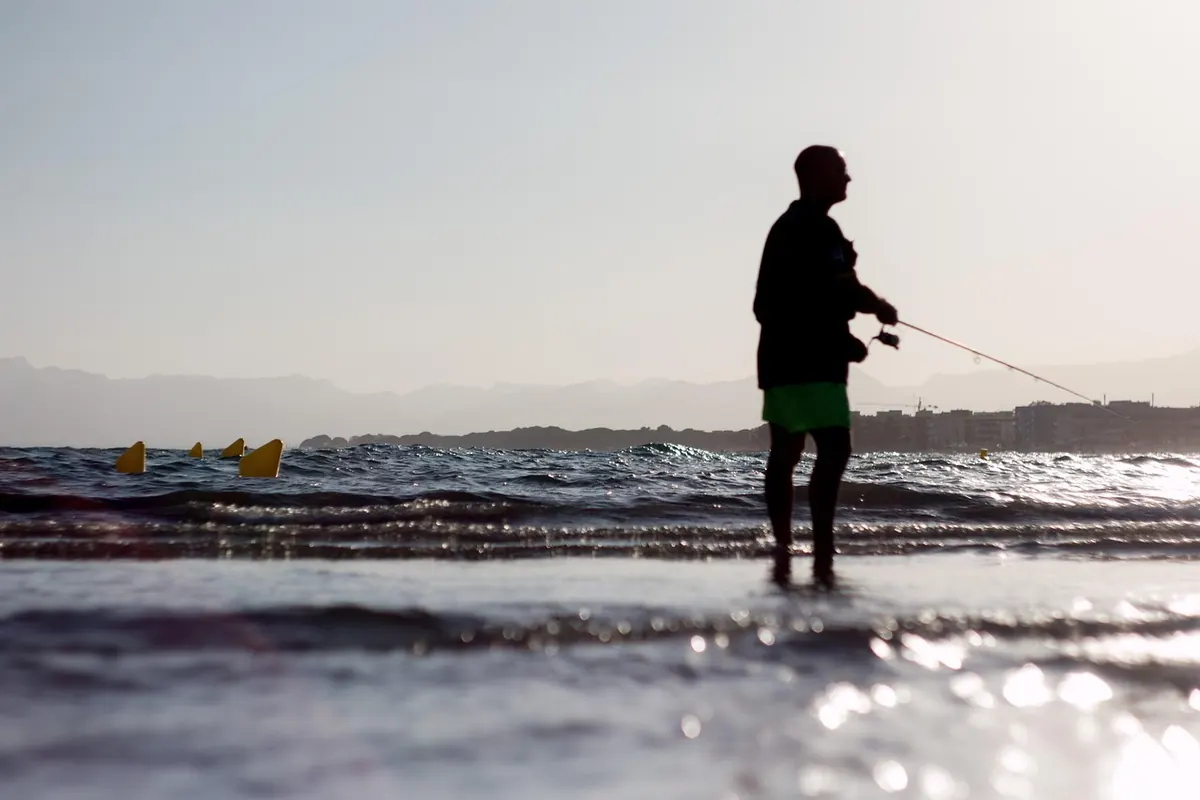
A tide table tells you when the water moves. It does not tell you when the fish feed. On the shore the two things are related, but not in the way most anglers assume. Plenty of good evenings are wasted on a mark that was never going to produce — not because the bait was wrong or the rig was clumsy, but because the session was built around high water when the real action had happened three hours earlier. Get the window right and everything else becomes easier.
Fish feed in relation to flow. Moving water shifts sand and weed, lifts worms and crustaceans out of the seabed and carries scent along the bottom. Predators use the edges of that flow as ambush points. When the water stands still, either side of high or low, most of that activity stops.
It is not simply a case of more movement being better, though. A tide running hard on a big spring will drag a lead along the bottom, tangle rigs and push baits out of position, and fish are reluctant to hold in that either. The productive band is usually steady, purposeful flow — enough to carry scent, not so much that nothing can sit still in it. That is why a well-timed three-hour session beats a nine-hour sit.
On most shore marks, the first two or three hours of the flood is the most reliable spell of the tide. New water pushes over ground that has been dry or shallow, and fish move with it. On a surf beach, bass and flounder come into the shallows following the scent line. On a rock ledge, wrasse and pollack move up over freshly covered weed. In a harbour, fish slip in with the rising water to hunt along the walls.
Watch where the first waves break as the tide begins to make, then follow that line up the beach. Fish often hold in the gutters and hollows that fill first. Recast as the water advances rather than leaving baits where they landed an hour ago; the strip of wet sand just below the breaking wave is frequently where the fish are sitting.
As the water drops, it flushes food out of mud, weed and rock pools, and fish line up along the channels to pick it off. Estuaries fish particularly well as the tide falls, with flounder and, in winter, codling moving down the creeks and out with the current.
The ebb usually fishes best in its middle section, once the initial flush after high water has settled into a steady run. The last hour before low can still produce, but on a big spring the water is often too thin and too fast over shallow ground to hold fish for long.
The half hour either side of high water is slack, but slack is not dead. Larger fish often use the lull to move over shallow banks and sandbars that would normally be too exposed, hunting with the advantage of extra depth. Rays and smoothhounds frequently show in that window.
Fishing slack water is a different game. You are not relying on the flow to carry scent to a fish; you are relying on the fish finding a static bait by smell alone, so use something oily and generous. Watch the rod tip for it dropping slack rather than pulling round — fish often pick up a bait on a still tide with barely a sign of a bite.
Low water works in the same way, and it brings a bonus. You can walk out and read the ground you have been casting into all evening: the gullies, the clean sand, the snags. That information is worth more than any single cast, and it will still be useful next week.
Treat that list as a starting point. Marks vary within a few hundred yards, so check the tide times and range for your own stretch before you commit to a plan.
Spring tides mean a bigger range and faster water. If the tide is pulling your lead, use a grip lead and a pulley rig to keep the bait pinned down, and consider fishing closer in where the flow is broken by banks or weed. Neap tides are gentler, and lighter plain leads with a flowing trace will fish well and let baits move naturally.
Bait choice follows the same logic. In fast water, scent does the work: a fat lugworm or a squid and mackerel cocktail, well bound, will keep releasing flavour in the current. In slack water, a bait with movement is better — peeler crab, a lively ragworm, or a strip of mackerel fished just off the bottom.
Watch your line as well as your rod tip. In a strong cross-tide the line forms a bow that hides bites, so keeping in touch with the lead, or using braid to reduce the curve, makes the difference between feeling a bite and missing it.
On rock marks and estuaries, keep an eye on the water behind you. Tides do not always behave as expected on a big spring, and a ledge that was dry when you arrived can be cut off surprisingly quickly.
Movement is the thing. Fish feed when the water is going somewhere and switch off when it stops. Fish the flood on open beaches, the ebb in estuaries, and give the slack around high water a proper go with a smelly static bait. Then write down what happened and when. The tide table never changes, but your timing gets sharper every season.
Photo: Estebanescu / Pixabay
Combine tide tables, storm surge forecasts and official weather warnings to judge winter coastal flood risk — plus a...
Chart datum is the baseline behind every UK tide height. Here's how to read predictions properly, add them to...

A practical checklist for dog owners on UK coasts and estuaries, covering tide tables, the rule of twelfths, cut-off...

Your daily guide to tides and coastal conditions.
